Monday, December 11, 2023

"All the Yiddished mamas": The story of Eddie Gottlieb


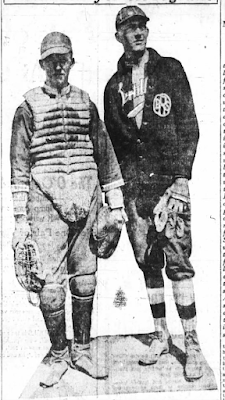
Brooklyn Times Union, 1935-8-14

It is no surprise that so many fine daughters of Yiddished [sic] mamas were flung before Eddie Gottlieb, for he was a great man indeed; perhaps the most powerful man in Philadelphia and New York in respect to semi-pro and Negro League baseball for many years, and elected to the National Basketball Hall of Fame in 1972. 

Eddie Gottlieb

Gottlieb was born in Kiev, Ukraine, in 1898, as Isadore Gottlieb, the only son of Morris Gottlieb. His father owned a candy store. His family moved to Philadelphia when he was ten, and he soon changed his name to the more gentile moniker of Edward. After just a few years in Philadelphia his father died, and Edward became the man of the house. Gottlieb played basketball and semipro baseball while attending the South Philadelphia High School, and after his graduation he founded a semipro basketball/baseball team, along with his friends Harry "Chick" Passon and Hugh Black. 

The team was soon titled the South Philadelphia Hebrew Association club, but they were usually called the SPHAs. The SPHAs would later become one of the leading basketball teams in the country under Gottlieb's leadership, winning three straight Eastern Basketball League titles (1929-30 to 1931-32) and a total of seven American Basketball League titles between 1933-34 and 1944-45. He was their coach until 1946. 

In the early 1920s they were just a local team, playing in the Philadelphia League, but those were the club's best years in baseball. 

The SPHAs peaked on the diamond in 1921 and 1922 under Gottlieb's management. They were solid in 1921, beating the Cressona Tigers, Cuban Stars, Hilldale, Indianapolis ABCs, Parkesburg Iron, American Chain, Camden, Bridesburg, House of David, and Lincoln Giants, according to the Wilmington Morning News. (1921-9-03, p. 11)

A game-used 1920s SPHAs baseball warm-up jacket. Note the Hebraic lettering, which spells SPHA from right to left. This picture is taken from the auction house Mile High Card Company.

 In September 1921, they played a well-attended series against the Old Timers for the championship of South Philadelphia. All games were held at the corner of Thirteenth and Johnson, the field the SPHAs shared with the Old Timers. Managed by Jack Hines, the Old Timers were a decent team. Their center fielder and lead-off batter was Johnny Castle, a 41-year-old who played in three games for the Philadelphia Phillies in 1910 and spent 1920 with the Wilson Bugs of the class B Virginia League. One of their pitchers, Bill McKenty, won 15 games with a 3.28 ERA for New Haven of the Eastern League in 1925.
 
The Old Timers won the first game 4-3 on September 2nd, in front of "the largest crowd that ever witnessed a game in South Philadelphia." The game ended in a most frustrating manner. The SPHAs had scored two runs with only one out in the top of the 8th to take the lead 5-4, but the game was called and the score reverted to 4-3. Eddie Gottlieb was not happy. He, quite understandably, believed the first game should not have been counted a loss for the SPHAs, and said the teams should have appointed an arbitration committee to settle disputes like that. "He does not object to his team losing, but says so much money should never have changed hands on the way the game ended." (The Evening Public Ledger, 1921-9-05, p. 12) I guess there was plenty of betting. 

 The SPHAs won the second game 10-5, September 5 before an equally large crowd, but the Old Timers came back to win the third and fourth games 6-4 and 8-1 (September 10 and 24.)

Wid Conroy joined the Old Timers at third base for the third and fourth games. Conroy had been a regular in the American League from 1901 to 1911 with the Brewers, Pirates, Highlanders and Senators, but was 44 by 1921. 38-year-old Gabby Street, Walter Johnson's former catcher, caught for the Old Timers in the 3rd game -- the team truly deserved its title. 

Box score of the third game, displaying the antediluvian line-up of the Old Timers.

The SPHAs won the fifth game of the series, but the series fizzled out after that: the SPHAs wanted to play further, as was "virtually agreed upon," and fight for the series which had been essentially stolen from them by the unjust calling off the first game, but the Old Timers were content with their 3-2 lead. It doesn't seem like any more games were played in the series. 

In 1922 the SPHAs joined the new-born but competitive Philadelphia Baseball Association, assigned to the Southern Division. Gottlieb put together a strong team, and they were successful from the start.

On May 1, opening day, before a huge crowd of about 10,000 fans, the SPHAs beat Hilldale 6-4 on the strength of a five-run sixth inning. Hilldale had Hall of Famers Judy Johnson at third, Louis Santop at catcher, and other solid Negro League players such as George Johnson, Otto Briggs, Phil Cockrell, and Harry Kenyon. The SPHAs had exactly zero players you would have heard of before reading this. 

The SPHAs would go on to beat Hilldale 8 to 6 (July 12), 5 to 4 (July 27), and 6 to 5 (June 21), when Lefty Vann threw a 2-hitter but walked a number of batters. Hilldale did beat the SPHAs at least once (I don't have a complete list of the games played by either team), when on June 13, before almost 10,000 fans, they demolished the SPHAs 9 to 3. 

According to the York Record (1924-2-12 p. 8), Elwood Krepps beat Hilldale four times in 1922. If that's correct, the SPHAs beat Hilldale at least two more times, because two of the SPHA-Hilldale wins came from Rube Chambers and Lefty Vann. 

The SPHAs also played a series with the Atlantic City Bacharach Giants, who were managed by future Negro League star Dick Lundy, then only 23 years old. As of August 9th, the SPHAs were up five games to one in their series. 

Thus, the 1922 SPHAs had a combined (probably incomplete) record of 9-2 against two teams who the next year would combine for a 60-46 record in the "Major League" Eastern Colored League. The comparison isn't quite fair, as both teams improved their rosters in 1923; Hilldale added HOF super-stars Biz Mackey and John Henry Lloyd, and the Bacharach Giants added a few semi-stars. It's still an impressive testimony, both to the quality of the 1922 SPHAs and the possible over-rated status of the Negro Leagues. 

1922 SPHAs

Elwood Krepps, 1922. 

The SPHAs had a very impressive pitching staff, primarily consisting of Elwood Krepps, Lefty Vann, and Chick Passon. Passon was co-founder of the SPHAs, while Krepps and Vann were hired guns. Elwood Krepps had pitched for the Raleigh Red Birds of the Piedmont League in 1920 and 1921, and would be fairly successful in the New York - Pennsylvania League and New England League from 1924 to 1929. 

On June 29th, Krepps no-hit Camden City in a 3-0 win. 

Arnold "Lefty" Vann, who had a 4-10 record in the NYPL in 1924, was probably the worst of the staff. He often played first base.


Harry "Chick" Passon

Pitcher Chick Passon was also the star of the basketball SPHAs, scoring 17.7 points per game in 1925-26, second in the Eastern Basketball League. But his days with the SPHAs were numbered. Gottlieb, who must not have been particularly sentimental, traded him to the Washington Palace-Five club in 1927-28. In his baseball career, Passon would pitch for Medford of the Burlington County League in 1923, and the semi-legendary Doherty Silk Sox from 1924 to 1926. The Silk Sox' second baseman, Bennie Borgmann, was likewise a basketball star in the winter - and not just any star, but the top scorer of the time. He led 15 leagues in scoring in 12 years, and was inducted to the Basketball Hall of Fame in 1961. 

Passon also made his mark in black baseball. By 1923, he was managing two minor black teams, the Texas Eagles and Philadelphia Giants. In 1931, he founded a new team called the Bacharach Giants. The Atlantic City Bacharach Giants, the team he had played against with the SPHAs, had folded after 1929, so he borrowed the name for recognition. The Philadelphia Bacharach Giants mostly played independently; in their sole year in the Negro Leagues, 1934, they won 5 games and lost 20. They would play until 1942, and were Roy Campanella's first team. Sadly, Passon shot himself in 1954. Source: https://sabr.org/journal/article/harry-passon-philadelphia-baseball-entrepreneur/

The elimination contest of the Philadelphia Baseball Association began in late August. The SPHAs were lined up against the other Southern Division teams in a kind of round-robin; I'm not sure what the exact logic of it was, or whether it reached any conclusion, but it is fun to read about. 

In their first game, August 28, Elwood Krepps shut out Fleisher Yarn on two hits for a 2-0 SPHA win. Nearly 5,000 fans were in attendance. The SPHAs won their second game by another two-hit shut-out, this one dealt by Chick Passon to the South Phillies, great rivals of the SPHAs. The game was played at Shetzline Park, the South Phils' home park, and attracted more than 10,000 fans. 

The South Phillies were an extremely strong team made of Philadelphia semi-pro legends such as Dick Spalding, a soccer star who would hit .296 as the Philadelphia Phillies regular outfielder in 1927, when he was 33; Buck Lai, a Chinese-Hawaiian 3rd baseman who spent four years in the Eastern League and played for the Brooklyn Bushwicks for many years; Howard Lohr, who played briefly in the majors in 1914 and 1916 and starred for many years in the semi-pros; Mike Pasquella, first baseman who in 1919 played one game for the Phillies and one game for the Cardinals; Pepper Peploski, short stop, who went 2 for 4 for the Detroit Tigers in 1913; and long-time pitcher-outfielder-first baseman Herb Steen, who had a .455 SLG in 33 games for the AA Syracuse Stars in 1922. 

In their return match with Fleisher Yarn, September 5th, the SPHAs were defeated 6-3 before 8,000 fans. On September 7th, due to bad weather, a mere 6,000 showed up to watch the SPHAs get shutout 4-0 by Jeff Tesreau, former New York Giants pitching star, in a rematch with the South Phillies. 

And that was it for the Philadelphia Baseball Association that year, as far I know. Hopefully it won't be long before I can update this with something definite. 

In 1923, Gottlieb focused on the basketball team, and the baseball team was consigned to mediocrity. It ceased to play after 1925, but was revived in 1933, and played for three more years before finally quitting. During this time, as has been summarized earlier, the basketball SPHAs became one of the top teams in America. 

But Gottlieb hadn't abandoned baseball. 

 In 1920, Passon, Gottlieb, and Black had opened a sporting good stores creatively called PGB Sports.

Ad placed in Philadelphia Evening Public Ledger, 1921-9-30, p. 21

After a few years Gottlieb, along with Black, sold out to Passon. but he put the connections with Negro League baseball he had made through the store to use. As his SABR bio states, "He became the leading booking agent for all Philadelphia sports, black and white." He was also the eastern booking agent for the Negro Leagues. 

And in the early 1930s, together with Ed Bolden, former owner of Hilldale, Gottlieb founded a Negro League team of his own: the Philadelphia Stars. The Stars joined the New National League in 1934, won 39 games and lost 18 in the regular season, and beat the Chicago American Giants 4-3-1 in a play-off to win the pennant. They never won another pennant, though they played through 1952. 

Basketball went major league with the founding of the Basketball Association of America in 1946, and Gottlieb was one of the founding fathers. He coached the Philadelphia Warriors to the 1946-47 championship, becoming the first champions in NBA history. (The NBA was created by the merging of the BAA with the NBL in 1949. Gottlieb played a significant part in the merger, and the NBA considers the BAA as part of its own history.)

He was the coach of the Warriors through 1954-55, and their general manager until 1964. 

According to Wikipedia, (I feel no shame in using Wikipedia as a source for basketball history),

"Gottlieb was behind the NBA's "territorial draft" rule, which gave teams the right to claim a local college or high school player in exchange for giving up their first-round draft pick. The rule was particularly advantageous for Philadelphia, which landed Overbrook High School's Wilt Chamberlain in 1959 after his stints with the University of Kansas and the Harlem Globetrotters."

Not bad.

Wilt The Stilt after his 100-point game


Gottlieb bought the Warriors in 1952 for $25,000, and sold them in 1962 for a reported $625,000 to investors in San Francisco, where the team would become the Golden State Warriors. 

No "Yiddished mama" ever snared him with a daughter, and Gottlieb was a bachelor to the end of his days. 

He headed the NBA Rules Committee for 25 years, and was the league's only schedule-maker for over 30 years, until the year of his death in 1979. 

Pure Wikipedia again:

"I probably was responsible for more rule changes in pro basketball than any other man," Gottlieb told the Associated Press late in his life. "They call me in now because I’m the only one left who can connect things to the past, who knows why this rule was put in or why that one was thrown out."

He was elected to the Naismith Memorial Basketball Hall of Fame in 1972, and the NBA Rookie of the Year award is still named after him. 

I'll close with this: (Man, copying from Wikipedia is a relief after digging through 1920s Philadelphia newspapers all afternoon.)

 "Eddie Gottlieb was one of the real pioneers of professional round ball," Red Smith wrote in The New York Times. Wrote Lupica, "Eddie Gottlieb loved basketball. Maybe no one ever loved basketball quite the way he did."

Fellow Hall of Famer Harry Litwack stated: "Gottlieb was about as important to the game of basketball as the basketball."


Wednesday, November 22, 2023

George Ely: The One-Armed Wonder

From 1907 to 1910, George Ely was one of the best semi-pro second baseman in Southern California. A slick fielder, he hit for both average and power, and had a knack for making clutch hits. He also had no right arm. 
1909

Ely was a telegraph operator for the Salt Lake Railroad. He was born George Alphonso Ely in Glendale, California, April 29, 1888. When a young child, he lost his right arm falling between the wheels of a cart. 

Instead of letting his lack of an arm keep him from a baseball career, he became the oddest kind of player I've ever seen: a one-armed left-handed second baseman 

The last left-handed second baseman to play regularly in professional baseball was "Kid" Mohler, who still holds the all-time record for pro games played at second base, with a mark of 2871. 

I also think it's possible George Ely played without a glove, at least for part of his career. 

 The 1909 picture of him, shown above, depicts him wearing a glove and no one ever mentioned that he didn't, but I think he might have from two different newspaper accounts.

The Santa Rosa Republican, August 04, 1905, p.4:

"When not playing in the box the one-armed wonder is still more spectacular in the outfield, where he has not made an error during the season. It is marvellous [sic] to see him trap the falling ball between his empty sleeve, his breast, and his left hand. No drive is too hard for him to tackle and hold." 

He tackled fly balls between his chest, sleeve, and hand - he didn't catch them. 

The Corning Daily Observer, November 12, 1908, p.3:

    "Ely thinks that a one-armed man, while handicapped to a certain degree, should be as good a player as one with both arms. He says that a man loses time transferring the ball from his right to left hand, which he would not do if he caught and threw the ball with the same hand." 

A one-armed player wearing a glove loses more time than a two-armed player, as evidenced by Pete Gray. 

Ely may have bypassed that by not wearing a glove, and I'm highly intrigued by the possibility. The newspaper accounts really do make it sound like he didn't wear a glove, and his posing with a glove is not proof that he played with a glove for his whole career, or even at all. It's hard to solve ambiguities like this from the distance of 115 years. 

He didn't let his handicap get in the way at the plate, either. Lefty Gervais, who pitched five games for the Boston Braves in 1913, recalled in 1948 that "Ely used the stub of his right arm, cut off at the elbow, to steady the bat at the plate and then developed a very powerful swing when he met the ball using only the left hand and arm." 

His amateur career can be traced as far back as 1903, when he was only 15. By 1905, he was a star pitcher and outfielder for Los Angeles High School, and had already received pro offers. His batting heroics had also begun. On July 9, pitching for the Johnson Machine Works team, he homered and won 5-3. On July 23, playing for the Forest Heights team of L.A., he hit three triples in a 12-6 win. Forest Heights' pitcher, Andy Briswalter, would go on to pitch for the Los Angeles Angels of the Pacific Coast League from 1908 to 1910, winning 31 games and losing 24.
1905

In 1906 he pitched for the Dyas-Cline sporting goods team. He had converted to second base by 1907, and was playing with the Thistles of the Southern California League. On October 13, 1907, Walter McCredie, the manager of the Portland Beavers, took a day off to watch the Thistles play Santa Monica. McCredie was impressed by Ely, but didn't make him an offer because of his handicap. 

In 1908 he played for the Salt Lakes of the Southern State League, and tied for the team-lead in batting average with a .333 mark in 69 at-bats and 16 games. A teammate of his with the Salt Lakes, Whitey Hensling, was a pitcher and third-baseman in the minor leagues for eight years. 

The Los Angeles Herald, 1908-6-27, p.7: 

George Ely, the one-arm baseball player, is just as good playing pool as he is on the diamond. In a game last night at McCormick's, Ely gave cards and spades to the captain and came through with the fifteen ball every time. 

Not sure what that means, exactly, but it does sound impressive. Merriam-Webster defines the phrase "cards and spades" as "a liberal handicap", as in "could give him cards and spades and still beat him at his own game." I had never seen that phrase before. 


In August 1908 he turned down an offer to play for the Santa Cruz Sandcrabs of the outlaw California State League - why, I am not exactly sure. 

Over the winter of 1908-09 he played with the Salt Lakes/Maiers in the California Winter League, and on November 2nd he turned an unassisted double play. It appears that the Maiers were the exact same team as the Salt Lakes, but were sponsored by Edward Maier, owner of the Vernon Tigers and Maier Beer.

On January 18, playing for the Maiers in a game against the Azusas, with Harry Lelande, president of the PCL, Edward Maier, and Hap Hogan, the Vernon Tigers' catcher, all in attendance, Ely doubled, scored the only run of the 1-0 game, and made an outstanding fielding play when he "ran thirty yards backwards after a fly ball and received considerable applause when he grabbed it safely." The PCL spectators thought of recommending him for the PCL, but nothing ever come of it. The Maiers' pitcher, Elmer Rieger, pitched a few games for the St. Louis Cardinals in 1910 and won 119 minor league games in a career which he spent mostly in the Pacific Coast League and American Association.


The Maiers finished in third place in the California Winter League. Note: the caption says it's listing the players from left to right, but is actually listing them from right to left. 

He spent a few months starring for Caldwell, Idaho in 1909.

The Caldwell Tribune, May 01, 1905, p.5:

"The baseball season opened Sunday... When the game ended the score stood nine to one in favor of Caldwell. Ely, the one-armed wonder, made more than good; he now hails from Caldwell."

He continued to play with the Maiers on his return to California. They won the California Summer League pennant, and as of September 30 had won 31 of their last 37 games. 

On April 24, 1910, playing for the Dyas-Cline club against the Los Angeles Grays, a black club, he smote a walk-off double in the bottom of the 10th to win the game 5-4. 

He was at second base for the Doyles, February 19, 1911, and did good work. The Doyles' pitcher, Oscar Jones, won 44 games for the Brooklyn Dodgers from 1903 to 1905, and won 226 minor league games. He was not in pro ball in 1912, but would win 24 games against eight losses for the Stockton Producers of the now class-D California State League in 1913. 

Ely broke his leg later in the year, and a benefit game was played for him at Vernon on December 16. Hap Hogan acted as umpire. 

I can only find one more record of him playing after that, but his career disappeared with a bang:  on April 21, 1912, for the Venice Ship Cafe club, he turned a sensational double play in the ninth inning and won the game with a walk-off triple in the bottom of the 10th. 

He continued to work as a telegraph operator. In 1918 he was working for the Salt Lake Railroad, as he had during his career, but by the 1940s he was working for the Union Pacific Railway.

He died June 25, 1967, in Newport Beach, California, at 79. 

George Ely's career was brief and he is now long-forgotten, but he deserves to be remembered. Though he was one-armed, he was no novelty player. He was a very good hitter and fielder in difficult semi-pro competition. Many of his teammates and opponents played in the minors and majors. He received pro offers, and would have received more if he had two arms. 

I hope to bring him back from obscurity with this post, at least in a small way. 


Saturday, October 7, 2023

A Tale of Two Koch Brothers

Ray Koch was always daring. He would give fans "the heebie-jeebies trying to turn singles into doubles" , and was apt to field balls hit to 2nd base "while turning a flip-flop or while sliding on his ear." And no one was Joe Gordon's regular double-play partner longer than him - Gordon was never paired so close or so long with Phil Rizzuto or Frankie Crosetti. 

Ray Koch & Joe Gordon first played together in high school and Junior American Legion ball in Portland. They were inseparable as amateurs - the only time they were not on the same team was in 1933, when as college freshmen Gordon played for the University of Oregon and Koch played for Western Oregon University. Koch transferred to the University of Oregon in 1934, and for two years they were "Oregon's greatest collegiate infield combination in history." Oregon won the Northwest Conference both years. In 1935 Gordon (.415) was named All-Conference shortstop and Koch (.319) was All-Conference second baseman. Gordon was All-Conference shortstop in 1934, but as I am unable to find the list I don't know whether Koch was also All-Conference. As Koch led Oregon with a .370 average, he probably was. 

In the summer they played in the Oregon State League - for Ray Brooks' West Side Babes in 1932, the Salem Senators in 1933, the Eugene Townies in 1934, and the Hop Golds in 1935. 

1934-6-24, Eugene Guard

As of August 22, 1934, Gordon was hitting .420 for the Townies and Koch was hitting .405. 

By 1935, major league scouts thronged the stands to watch them, and before the end of the year Koch & Gordon had both left college and signed with the New York Yankees. Their coach at the University of Oregon, Howard Hobson, unsuccessfully tried to convince them to finish school first, but they were too intent on their major league dreams to heed him. 

They left college and signed with the Yankees together, but their paths diverged from there. In 1936 Gordon was sent to Oakland of the Pacific Coast League, where he hit .300. By 1938 he was the starting second baseman for the New York Yankees, and was on his way to the Hall of Fame.

By 1938, Ray Koch was "working in Portland". In 1936 he had been sent to class-C Joplin, and hit .261 without power. He also hurt his knee. He never played in pro ball again.

He continued to play in the Oregon State League and in 1941 he was joined on the Eugene Athletics by his younger brother, Barney Koch.

Barney Koch was just eighteen years old in 1941 when he joined Ray with Eugene. Barney had begun in the State League in 1940 with the Portland Babes, managed by Ray Brooks, the same team and the same manager that Ray Koch and Joe Gordon had begun with eight years earlier.


In 1942, as a college freshman, Barney became varsity second baseman of the University of Oregon, and by 1943 he had become the top amateur second baseman in Oregon. He spent that summer playing with the champion Portland Firemen of the Portland City League. The age of the average Fireman was a mere 18 years and two months, but they were utterly dominant. Up to July 27 they had won 11 games and lost one, scoring 142 runs and allowing 13. Barney Koch hit .583, with 35 hits in 60 at-bats. The only pitcher to beat the Firemen was a major league veteran, Sergeant Jack Knott of the Camp Adair Timber Wolves, who defeated them 4-0, July 16, in the final round of the Oregon semi-pro tournament. Koch was named the best infielder of the state tournament. 

The champion soldier Timber Wolves were unable to travel to Wichita, Kansas for the national semi-pro tournament, so the Firemen represented Oregon in their place. Despite their youth and competition from teams with players such as Pete Reiser and Cecil Travis, the Firemen finished 7th nationally. 

After the tournament Ray Brooks, "Mr. Oregon Semi-Pro Baseball himself" and manager of the Firemen, had eight of his players in the Dodgers try-out camp. The Dodgers signed one of them: Barney Koch. 

 In 1943, second base for the Brooklyn Dodgers had been manned by Hall of Famer Billy Herman, who hit .330 with 100 runs batted in and 193 hits. In 1945, Eddie Stanky would play second base for the Dodgers, scoring 128 runs on the strength of 148 walks. 

1944 was a second-base Brooklyn trolley wreck. 10 different players spent time at 2nd, none starting more than 58 games there. The fill-in with the fourth-most starts at 2nd (26) was Barney Koch. 

Koch had started the 1944 season with the International League Montreal Royals but was called up to Brooklyn in late July. In his debut on July 23, the first game of a double-header against the Pittsburgh Pirates, Barney batted lead-off and hit three singles. That would remain his major league career high in hits forever. 

Just 21, Barney finished the 1944 season with a .219 average in 33 games for the Dodgers, and a .252 average with 48 runs scored in 82 games for Montreal. He hit 11 doubles, 2 triples, and 0 home runs. His most notable quality was probably his weight: weighing but 140 pounds, he was the lightest major leaguer of the 1940s. 

In 1945, Koch declined to sign his Dodgers contract in order to attend college through summer.

Like his brother Ray, Barney Koch had left the University of Oregon to play pro baseball. Unlike Ray, he left the pros on his own terms: he quit the Dodgers and finished college. 

But he didn't stop playing baseball. He spent 1945 playing with the Giustina Reds of the Cascade League. In 16 games he batted a sweet .313 with 20 hits, 13 runs scored, and 9 stolen bases. Surprisingly, given his customary lack of power, he also led the league in home runs, with 4. 

He had a spectacular semi-pro career in Oregon which lasted until 1953. He led the Cascade League in batting in 1948, with a .416 mark. In 1949 he played with Roseburg of the Southwestern Oregon League and was named the team's MVP, hitting .389. In 1951 he was a member of the state champion Coos Bay - North Bend club. 

Hit .416 with the Miller Lumbermen of the Cascade League in 1948.
1952: with the Roseburg Chiefs of the Southwestern Oregon League. 


Barney became the baseball and basketball coach of the high school Grant Generals, and was with them from 1950 to 1960. His teams won 5 Portland Inter-Scholastic League titles and two state titles (1951, 1958). He was inducted into the Portland Interscholastic League Hall of Fame in 2005. 

Barney as Grant HS coach.

Ray Koch became a golfer, and was the club manager of Inglewood Golf & Country Club of Seattle for a number of years. He died in 1978, Bothell, WA, at 65.

Barney Koch:
BR TR 
HT 5'8" WT 140 
Born 1923-3-23, Campbell, Nebraska
Died 1987-6-06, Tacoma, Washington
Barnett Koch

Year Avg   HR RBI H AB G R SB  Tm Lg
1940                                                Portland Babes, Oregon State League
1941                                                Eugene Athletics, Oregon State League
1942 .339                21 62 15          Portland Firemen, Oregon State League
1943 .583                35 60 12          Portland Firemen, Portland City League
1944 .252   0 21     71 282 82 48 7 Montreal Royals, International League
1944 .219   0   1     21   96 33 11  0 Brooklyn Dodgers, National League
1945 .313   4          20   64 16 13  9 Giustina Reds, Cascade League
1946 .362      15     25   69 16 15     Giustina Reds, Cascade League
1947                                                 Portland McElroy Dancers
1948 .416               37   89      16     Miller Lumbermen, Cascade League
1949 .389               21   54               Roseburg Chiefs, Southwestern Oregon League
1951                                                 Coos Bay - North Bend, Southwestern Oregon League    
1952                                                 Roseburg Chiefs, Southwestern Oregon League
1953                                                  Drain Black Sox, Southwestern Oregon League

Here's a link to all the sources I used to write this post, including some extra material that I didn't include:
https://semiprobaseballdatabase.blogspot.com/2023/09/barney-koch.html

Wednesday, June 8, 2022

Carol Land: Deaf mute pitcher with a 27 year career

Carol Gillespie Land was a tall righthander who starred for over twenty years in California semi-pro ball. A deaf mute, he started his career with the State Institute for the Deaf and Blind team and quickly became a sensation. In 1915, a man named Al Erle compared him to the major leaguer Luther (Dummy) Taylor in the San Francisco Chronicle, saying that in two years of pitching for the State Institute he had not lost a single game, and averaged 16 or 17 strikeouts a game. 

Erle went on to say that "Carroll's arms reach almost down to his knees and you should see the stuff he puts on the ball. He is the greatest pitcher I ever saw in the bushes and I expect to see Land make a mark in professional baseball." He was 19 years old then, but never played professional baseball. 

He didn't abandon the Institute for the Deaf and Blind, serving as its athletic director for many years, but continued his pitching career elsewhere. 

While pitching for the Stars in 1915 he struck out 139 batters in 11 games. An article about his earlier career in the Oakland Tribune, 1916-1-16, says that he struck out 24 batters in one game against the Richmond High School . It gives a more conservative estimate of 14 to 15 strikeouts per game for his time with the State Institute team, and I'm sure all these eye-popping K figures weren't against top quality teams, but they're still very impressive.

In 1916 and 1917 he pitched for the Bertillion Hatters of the Oakland Commercial League, and averaged more than 12 strikeouts a game in 1916. The Bertillion Hatters were a young team, with an average age of 17 in 1916, but very good. Their star, Johnny Tonkin, played one game for the San Francisco Seals in 1916. He went 0 for 1, but still. 

Probably from his time with the Bertillion Hatters, Land (right) and battery mate "Wild" Bill Keane

 From 1918 to 1924 he pitched with some of the best semi-pro teams in California like the Merced Bears, Vitt Grays, and Durant Motors. He wasn't striking out 10+ batters a game anymore, but part of that was from the stiffer competition. 

1922 Durant Motors. Land is second from left, front row. 

1925 to 1933 were pretty uneventful years for him, athletically. I've only found two notes of him pitching: with the Amaral Brothers of Alvarado in the 1927-28 season, and for Placerville in 1930. I don't know his exact birthdate, but he would have been about 34 in 1930 so it would have been reasonable to assume his career was over. 

It was not. In 1934 he joined the Placerville Bartletts of the amateur Placer-Nevada League, and would pitch for them until 1941. The Placer-Nevada wasn't a great league, probably a step below the Sacramento Valley League, but it was competitive. 

His year of glory in the league was 1935, when he was manager and pitcher of Placerville. With the help of a .528 average from former major leaguer Bevo LeBourveau , Placerville won the league championship, winning all seven games in the second half, and then defeating the Colfax Lions in a best-of-three playoff. Land won both games. At 40 years old, he was the league's leading pitcher, and sports editor Scoop Thurman put Land on his Placer-Nevada All-Star team.

He pitched for Placerville until 1941 (but pitched for Colfax in 1939), and though he never did quite as well as in 1935, pitching until you're 46 is still impressive.

He left for Washington D.C after 1941 for a job as a photographer in the Federal Works Agency, and as far as I know never pitched again. 


Carol Gillespie Land
"Dummy" also Carroll
TR 
6'2"
Born 2-12-1896, Vernon Mississippi

1915-16 Houts & Ramage struck out 139 for Stars
1920-21 Modern Woodmen Oakland Tribune Class B
1921-22 Vitt Grays              Oakland Tribune Class A


Moving blog address

 Hi y'all, I decided to move this blog to  universalbaseballhistory.blogspot.com  because the name of this blog limits my scope somewhat...